
 Is aluminum or steel the better choice for your fabrication project?
Like most things in custom metal fabrication, the answer is: it depends. Choosing between aluminum and steel can sound straightforward until the finished structure has to support several thousand pounds, withstand years of road salt, or be lifted into place with limited site access.
At Macy Industries, we fabricate everything from metal signs and countertops to industrial enclosures and mezzanines. Our work across industrial and architectural fabrication has given us extensive experience with the properties of these two material families. This experience helps customers look beyond price per pound and select the material that can handle the product’s structural demands, environmental exposure, transportation, installation, maintenance, and expected service life.
Where Aluminum Has the Advantage
Aluminum combines low weight, natural corrosion resistance, and a high strength-to-weight ratio.
At roughly one-third the density of steel, parts made from aluminum are often easier to transport, lift, handle, and install—an important feature when a component must be moved frequently or installed where access is limited.
There are two aluminum alloys we work with most often:
- 5052-H32 is commonly used for sheet metal parts because of its formability and corrosion resistance.
- 6061-T6 is commonly used for structural shapes, frames, and machined components.
Because aluminum isn’t as stiff as steel, it’s generally not the best option for heavily loaded structures. Some of the products we fabricate from aluminum include platforms, equipment frames, enclosures, guards, railings, access ladders, brackets, supports, and marine-related structures.
Where Steel Has the Advantage
When strength, stiffness, impact resistance, or structural capacity outweigh the need to minimize weight, steel is often the material of choice. For example, if you need a frame capable of supporting several thousand pounds, steel may stay more rigid without requiring substantially larger structural members to support the load.
It’s important to clarify that “steel” itself isn’t a single material. When we talk about steel, we’re referring to a few different material types that fall under this broader category:
- Carbon steel is typically the most economical choice for general structural work. It’s well suited to heavy frames and load-bearing equipment but generally needs paint, powder coating, or galvanizing when corrosion is a concern.
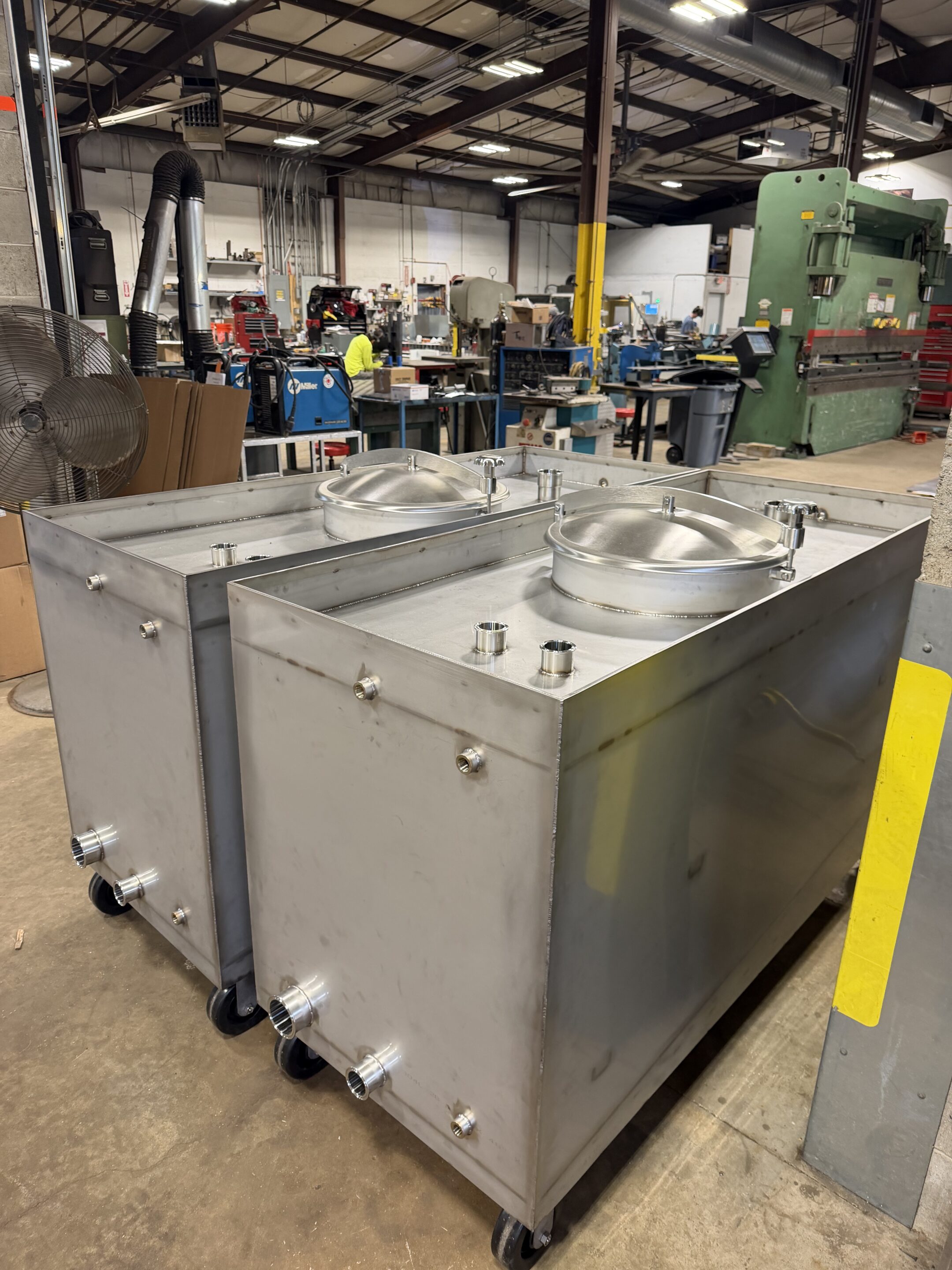
- Stainless steel is prized for its corrosion resistance, cleanability, and visual appeal. Type 304 is a common general-purpose option, while Type 316 offers better chloride resistance and is often the right choice around coastal salt, road salt, certain chemicals, and aggressive washdown conditions.
- Galvanized steel is carbon steel protected by a zinc coating. It provides a practical middle ground when a project needs steel’s strength and economics along with greater outdoor corrosion protection.
When it comes to steel fabrication, some of the parts we make at Macy Industries include stairs, mezzanines, platforms, equipment frames, guards, fixtures, weldments, and custom industrial equipment. These are all products where strength is of the utmost importance.
Match the Material and Finish to the Environment
From winter snow to summer humidity, New England weather isn’t always kind to outdoor metal structures. For outdoor parts, both the material and finish determine long-term durability. While aluminum and stainless steel provide inherent corrosion resistance, carbon steel can also perform very well outdoors with the right protection.
This same consideration is important for indoor parts exposed to washdown requirements, food-processing environments, high humidity, or chemical exposure. In each case, stainless steel may be preferred depending on the specific exposure.
When it comes to determining the right material for the environment, often the decision isn’t simply whether aluminum or steel is best, but whether a finish should be added to provide an extra layer of protection:
- Powder coating and wet paint can provide color and added surface protection.
- Hot-dip galvanizing gives carbon steel a durable zinc barrier for outdoor and industrial structures.
- Anodizing enhances aluminum’s oxide layer and can improve both appearance and corrosion resistance.
Some aluminum or stainless steel parts can also be left with a mill or natural finish when the material’s inherent corrosion resistance and appearance meet the application’s needs.
Choose Based on the Whole Application
Although quality is always the top priority, budgetary concerns usually follow close behind. And while it can be easy to default to price per pound when evaluating materials, remember that many factors affect the final cost. For example, while aluminum normally carries a higher raw material cost, reduced freight and lifting requirements, along with simpler installation, may help offset that initial expense. Similarly, while carbon steel normally costs less upfront and provides greater rigidity, the need for a protective finish and eventual maintenance may add to its lifetime cost.
When you work with Macy Industries, our experience in design, fabrication, and installation lets us evaluate the whole application and help you choose the material that makes the most sense for your project. Request a quote today.