
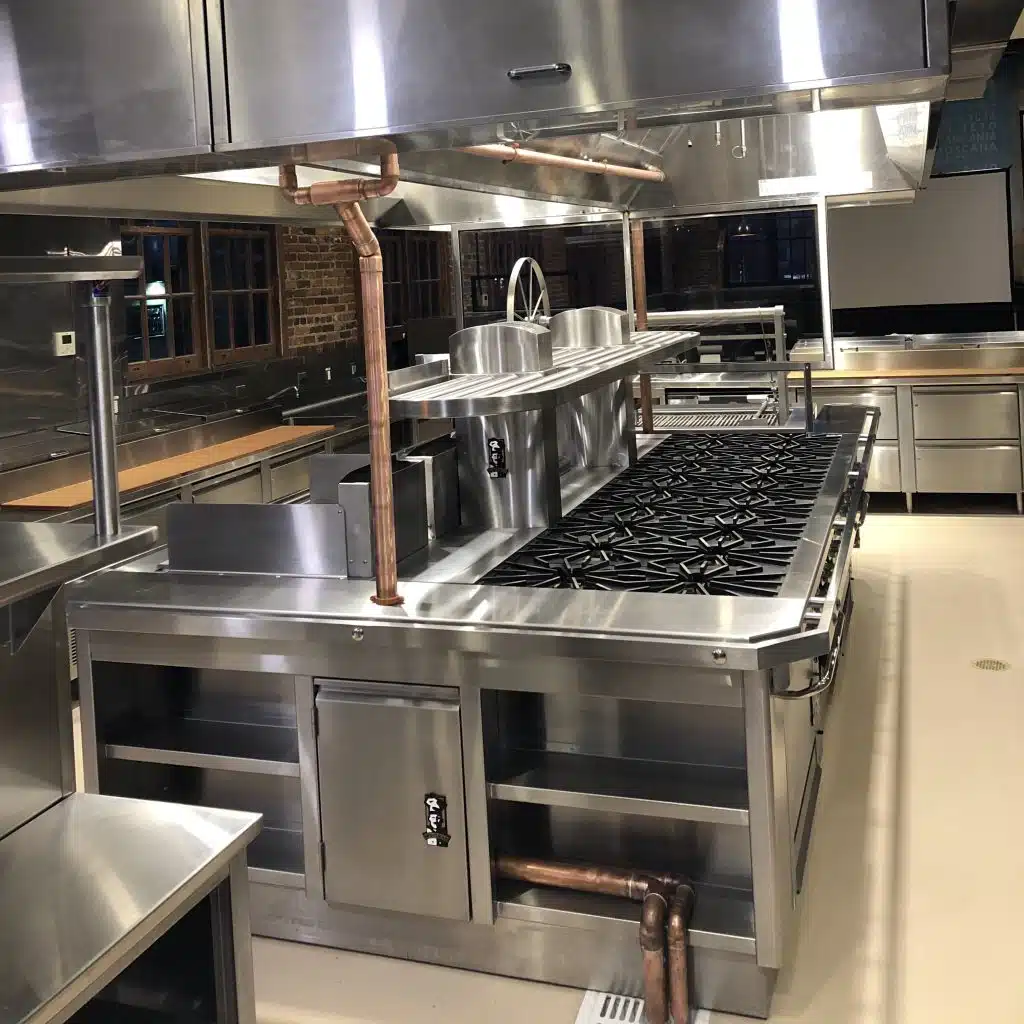
A commercial kitchen exhaust system is a life-safety system designed to remove grease, smoke, heat, and fumes generated during cooking operations.
For many restaurant owners, the hood and ductwork above their cooking line or dishwasher work quietly in the background—until it doesn’t. Whether you’re outfitting a new restaurant or bringing an older system up to code, ensuring your exhaust system is safe and compliant isn’t just a box to check. It is essential for protecting your business, your employees, and your customers.
Key Takeaways for Commercial Kitchen Owners
- Commercial kitchen exhaust systems reduce fire risk, improve air quality, and support code compliance.
- Type 1 hoods are required for grease-producing equipment, while Type 2 hoods are used for steam and heat only.
- Proper grease duct construction and fire-rated protection are critical for long-term safety.
- Early planning and coordination with inspectors helps avoid costly redesigns and delays.
Why Kitchen Exhaust Systems Are So Important
While great food is the goal, maintaining air quality, preventing fires, and adhering to safety codes are the responsibilities of every restaurant owner. A properly designed and installed kitchen exhaust system is critical for:
- Fire Prevention: Grease is highly combustible, making proper ventilation and grease removal essential to prevent dangerous fires.
- Air Quality: From smoke and fumes to heat and odors, an effective exhaust system keeps employees comfortable and safe.
- Compliance: Kitchen exhaust systems must meet applicable NFPA and UL requirements to ensure safety, protect the building and its occupants, and maintain operational compliance.
Types of Commercial Kitchen Hoods
Not all exhaust systems are created equal. Macy Industries installs two types of exhaust hoods to meet the needs of commercial kitchens:
- Type 1 Hoods: These hoods are designed to remove grease, heat, smoke, and moisture. They are essential for cooking lines where grease accumulation is a concern. Built from 304 stainless steel with a #4 polish for easy cleaning, Type 1 hoods require thick, 16-gauge steel grease ducts with fully welded seams to reduce fire risk.
- Type 2 Hoods: Used for applications like dishwashers, pizza ovens, and lab fume exhaust, Type 2 hoods handle steam, heat, and fumes. Since grease is not present, these hoods can be fabricated from lighter materials such as galvanized or stainless steel, prioritizing corrosion resistance.
Type 1 vs Type 2 Kitchen Hoods
| Feature | Type 1 Hood | Type 2 Hood |
|---|---|---|
| Primary Use | Grease-producing equipment | Steam, heat, and fumes only |
| Grease Capture | Yes | No |
| Typical Applications | Ranges, fryers, grills | Dishwashers, some ovens |
| Duct Requirements | Welded grease duct | Lighter ducting allowed |
Taking on Complex Projects With Confidence
At Macy Industries, we’ve seen it all—and solved it all.
One standout commercial kitchen project we completed was for a mixed-use space in Salem, NH. Our task was to future-proof the building for eventual restaurant tenants while ensuring the systems met current safety and compliance standards. To achieve this, we installed three grease duct shafts, each 80 feet tall and measuring 4 feet wide by 2 feet deep, to accommodate the needs of future kitchens.
We fabricated the exhaust ducts in 20-foot sections at our shop, welding each piece to create a fire-safe, leak-proof system. Once on-site, our team used cranes to position the sections and completed the final welds within the tight confines of the shafts. Even though these ducts were not immediately connected to kitchen equipment, they were designed with flexibility to support future tenant layouts.
This project required careful coordination to meet NFPA standards, incorporate fire-rated insulation, and ensure long-term reliability while working within the building’s unique structural constraints.
The Macy Approach to Kitchen Exhaust Systems
At Macy Industries, our process takes your project from concept to completion with efficiency, precision, and care. Whether you are starting from scratch with a new build or upgrading an outdated system, our team ensures the exhaust system is code-compliant, functional, and properly integrated into the space.
Designing for Safety and Performance
Every project begins with a deep dive into the kitchen’s specific needs. We conduct site walks, take detailed measurements, and evaluate:
- Where the hood will be installed
- What equipment it will support
- Structural constraints such as ceiling height, wall construction, and available duct routes
We coordinate with local inspectors and secure required permits early in the process. Using CAD software, we develop 3D models that ensure accurate hood placement and efficient duct routing.
Turning Plans Into Reality
Once the design is finalized, our fabrication team builds the system using CNC plasma cutters and press brakes. Ductwork is formed, welded, and assembled to create a fire-safe, leak-proof solution tailored to the building layout.
Expert Installation for Long-Term Reliability
During installation, hoods are set, ducts are fitted section by section, and all grease duct seams are fully welded. Fire-rated insulation is applied wherever ducts pass through combustible materials. The system is then tested and inspected in coordination with local officials to confirm proper performance.
Common Commercial Kitchen Exhaust Mistakes
- Undersized hoods that fail to capture grease and smoke
- Improperly welded grease ducts that allow leaks
- Poor coordination with building structure and ceiling space
- Designing systems without considering future tenant needs
Your Trusted Partner for Kitchen Exhaust Solutions
At Macy Industries, we understand that a reliable, compliant kitchen exhaust system directly impacts safety, operations, and long-term maintenance costs. From design and fabrication to installation and inspection, we support your project every step of the way.
Ready to get started? Contact Macy Industries to discuss your project and learn how we can make your kitchen safer, more efficient, and fully compliant.